


Main Content
Townhomes vs. Condos: 6 Key Differences Before You Buy
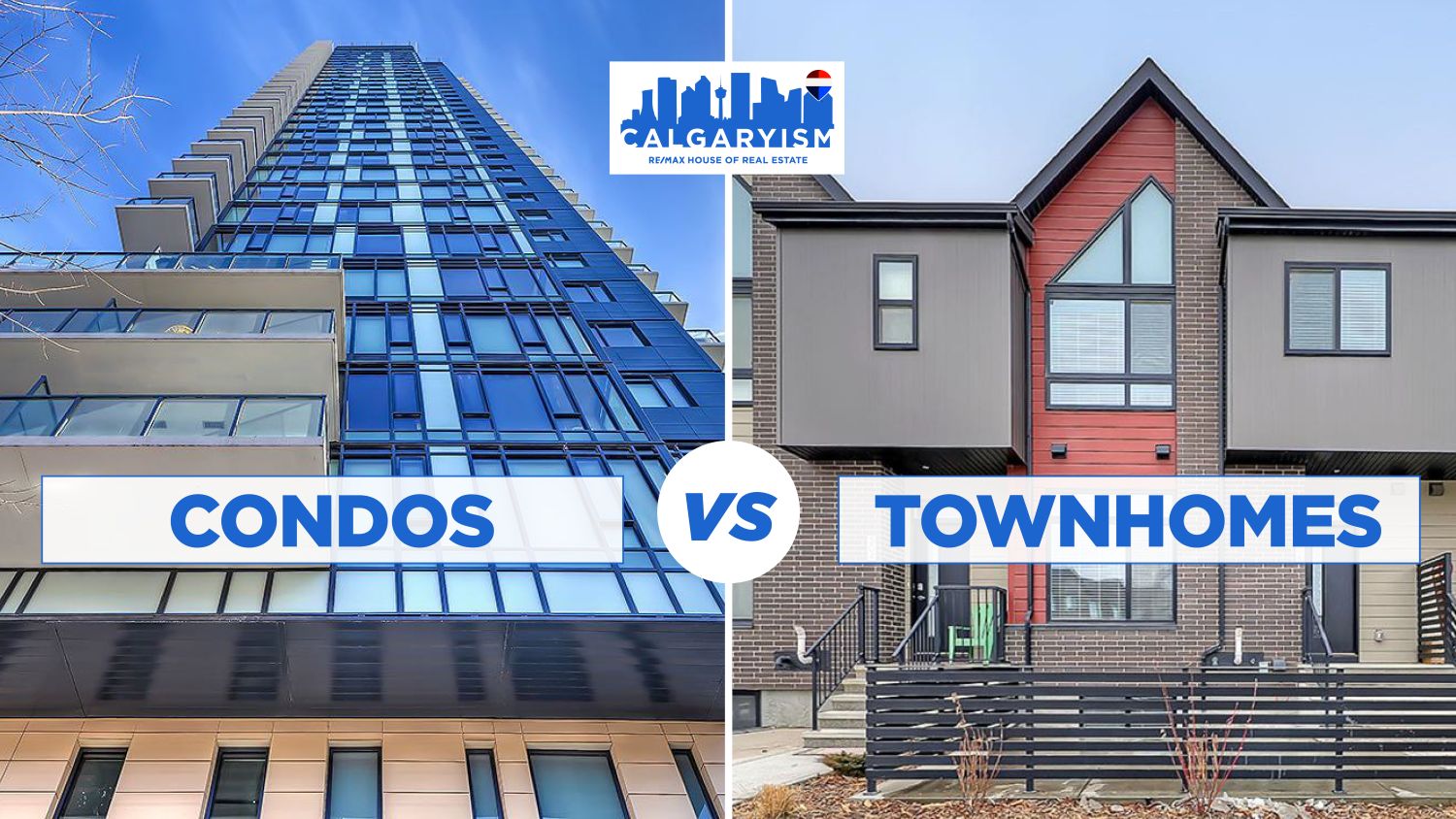
Buying a property is a significant financial milestone, and understanding your available options is critical to making the right choice. Homebuyers frequently weigh the benefits of townhomes vs. condos, as both offer excellent entry points into the real estate market due to their relative affordability versus other home types and low-maintenance lifestyles. In fact, recent polling from Abacus Data shows that 60% of first-time buyers are adjusting their expectations downward, planning for a smaller home or a different home type [1]. That’s where condos and townhomes become attractive options.
The differences between these two property type segments can sometimes confuse potential homebuyers. Below, we explore the distinct characteristics of condos and townhouses, what sets them apart, and the unique advantages they offer. Understanding these differences is essential for anyone choosing between these residential market segments for their next real estate move.
What is a condominium?
A condominium, commonly referred to as a condo or apartment – although the latter often refers to rentals – is a private residential unit situated within a larger building or complex. When you buy a condo, you legally own everything “inside the walls” of your specific unit. However, the exterior of the building, the land it sits on, and all communal areas are jointly owned by all the unit owners in the complex. Commonly, a condo corporation or Homeowners’ Association (HOA) manages these shared spaces, funded by monthly condo fees paid by each resident.
Key features of condominium properties
- Shared Amenities: Condos often offer access to communal facilities such as fitness centers, pools, rooftop patios, and party rooms.
- Maintenance-Free Living: The condo board handles all maintenance outside the walls of your unit, including roof repairs, landscaping, and snow removal.
- Enhanced Security: Many mid- to high-rise condo buildings feature secure fob entry, concierge services, and security cameras.
- Single-Level Layouts: Most condo units are confined to a single floor, offering excellent accessibility without stairs.
- Urban Locations: Condominiums are often located in high-density, walkable urban centers near transit and employment hubs.
- Most Affordable: Condos are often more affordable than comparable townhouses and larger attached and detached single-family properties, making them an ideal entry point into home ownership for first-time buyers.
What is a townhouse?
A townhouse, or townhome, is a multi-level residential property that shares one or two walls with adjacent properties but features its own private exterior entrance. Unlike an apartment-style condo, a townhome usually includes ownership of the small plot of land it sits on, including front- and back-yard spaces or driveways. Townhomes blend the privacy and multi-level layout of a detached house with the affordability and community aspect of attached living.
Key features of townhome properties
- Multi-Level Living: Townhomes typically span two or three stories, sometimes with a basement and a main floor living area separating the bedrooms above.
- Private Entrances: Every townhome has its own direct exterior entrance, eliminating the need to pass through shared indoor lobbies or hallways.
- Private Outdoor Space: Most townhomes come with a private backyard, patio, or front yard, making them highly suitable for pet owners and growing families with young children.
- Attached Garages: Many modern townhouses feature an attached private garage, providing secure parking and additional storage.
- Fewer Shared Walls: Depending on whether it is an end unit or an interior unit, townhouse residents only share one or two vertical walls with their neighbours.
- More Affordable: While townhouses are not as affordable as condos, they do cost less than semi-detached or detached property types
Important Differences & Considerations (Condo vs Townhouse)
View this post on Instagram
When comparing a condo versus a townhome, it is vital to evaluate how their structural differences can impact your daily life and financial responsibilities. Below are six key differences between townhouses and condominiums to consider before making any firm decisions.
#1 – Ownership Structure and Land
Condominiums: You own only the interior space of your unit. The building’s exterior including the roof, and the land underneath the complex are collectively owned by all residents through the condo corporation or HOA. As a result, you have a very limited say in exterior modifications, as these are strictly governed by the condo board’s bylaws and insured by common insurance.
Townhomes: You generally own the interior and exterior of the structure, as well as the specific plot of land the townhome sits on. As a result, you’ll be able to set up any outdoor spaces you own with furniture and décor accordingly. While there may still be a condo board or HOA governing your development’s aesthetic continuity, townhouses offer a stronger sense of traditional land ownership.
#2 – Privacy and Shared Walls
Condominiums: Living in a condo often means you have less privacy than in a townhouse, as units share multiple walls, ceilings, and floors with neighbouring apartments. You will also frequently encounter neighbours in shared hallways, elevators, and lobbies, making it a more social and communal environment.
Townhomes: Living in a townhouse offers greater privacy because you share only vertical adjoining walls with neighbours, so no one is living directly above or below you. Your private entrance also limits casual, passing interactions with neighbours. In some instances, townhouses may be part of a condominium development and share amenities such as underground parking, common entranceways, and elevators.
#3 – Maintenance and HOA Fees
Condominiums: Monthly condo fees are typically higher because they cover extensive building maintenance, structural insurance, and the upkeep of shared amenities. However, this means you are completely free from exterior maintenance chores; the trade-off gives you more freedom to live a full lock-and-leave lifestyle, especially valuable for homebuyers who value convenience.
Townhomes: Townhomes that are part of a condo board or HOA usually have lower fees than condos because there are fewer common structures and amenities to maintain. However, the owner is often responsible for more direct maintenance, such as caring for their private yard or maintaining the exterior structure, depending on the specific community bylaws.
#4 – Amenities and Facilities
Condominiums: High-rise condos often boast luxurious, resort-style amenities. Depending on the building, you might have access to swimming pools, saunas, yoga studios, guest suites, and 24/7 security personnel. Newer condo developments especially focus on providing as many high-quality in-house amenities as possible, adding to the building’s appeal as a place to live.
Townhomes: Townhome complexes generally prioritize residential space over communal facilities. While some upscale townhome developments might feature a shared clubhouse or a small park, they rarely offer the extensive indoor amenities found in condo towers.
#5 – Outdoor Space and Pets
Condominiums: Outdoor space is usually limited to a private balcony or terrace. Because of this, condos can be challenging for large dogs, and condo boards often have strict weight or breed restrictions. Some may also limit the type of pets, such as birds or other unusual critters. Make sure to check any condo’s pet bylaws before making any decisions to move forward.
Townhomes: Most townhomes feature a private, ground-level yard or a substantial deck. This makes them significantly more appealing for families with young children or dog owners who can utilize immediate, private outdoor access.
#6 – Price and Affordability
Condominiums: Condos are often the most affordable entry point compared with townhomes and detached homes, but pricing varies by neighbourhood, building age, and fees. They have lower upfront purchase prices and lower property taxes than larger homes, making them highly accessible – particularly for first-time buyers and others seeking an affordable living arrangement.
Townhomes: Townhomes are typically more expensive to purchase than condos due to their larger square footage, land ownership, and multi-level designs. However, comparing condos vs townhomes, a townhome is still vastly more affordable than a fully detached single-family house.
Townhomes vs Condos: Which is Best for You?

Deciding between a condo vs townhouse ultimately depends on your budget, lifestyle preferences, and space requirements. If you desire a maintenance-free lifestyle, luxurious amenities, and proximity to the city centre (where lots of residential towers are typically located), then a condominium is likely your best choice. Conversely, if you prioritize a private yard, a multi-level layout, and lower monthly HOA fees, a townhome will better suit you.
Carefully evaluate your current needs and long-term goals before moving forward with any property. And when in doubt about the nuances of condos vs townhomes, it is always best to contact a local real estate professional who can guide you toward the perfect property for your portfolio.
Condos vs. Townhomes: Frequently Asked Questions
Can I rent out a condo or townhome?
Yes sometimes, but many condos and some townhome communities restrict rentals in their bylaws. Confirm rules before buying.
What do condo fees cover vs townhome HOA fees?
Condo fees often cover building exterior, insurance, common utilities, and amenities. Townhome HOA fees (if applicable) usually cover shared items like snow removal and common landscaping.
How does insurance work for condos vs townhomes?
Condo corporations insure common property, while owners insure their unit interior and contents. Townhome owners may insure more of the structure depending on whether it’s freehold or condo-style.
Is it harder to get a mortgage for a condo?
It can be, because lenders may review reserve funds, bylaws, and rental ratios. Townhomes are often underwritten more like single-family homes.
Which is better for pets: a condo or a townhouse?
Townhomes usually offer easier outdoor access and fewer pet restrictions. Condos may have stricter rules, so check bylaws carefully.
What documents should I review before buying?
For condos and condo-style townhomes, review condo documents, reserve fund studies, and recent special assessments. For freehold townhomes, review any HOA rules and inspect the exterior condition closely.
SOURCES:
1 – https://abacusdata.ca/housing-the-goal-how-canadians-are-resizing-expectations-and-redefining-what-homeownership-means/
Required fields are marked*
- Airdrie
- Alberta
- Arts and Culture
- Blog
- Buying Tips
- Calgary
- Calgary Activities and Events
- Calgary Communities
- Calgary Condo Guide
- Calgary Infill Homes
- Calgary Luxury Homes
- Calgary New Condo Guide
- Calgary New Homes
- Calgary Real Estate Statistics
- Calgary Restaurants
- Calgary Townhomes
- Canada
- Chestermere
- Cochrane
- Condo Building Review
- Condos in Calgary
- Featured Blog Posts
- Featured Blogs
- First Time Home Buyers Guide
- Listings
- Moving to Calgary
- New Condo Projects
- Oil and Gas
- Okotoks
- Selling Tips
- Slider
- Testimonials
- The Best in Calgary
- Uncategorized
- Video Testimonials
- Contact Us
- Search MLS®
- Sellers’ Guide
- Buyers’ Guide
- About Cody & Jordan
- Blog
- Testimonials
- Downtown Calgary
- SW Calgary
- SE Calgary
- NE Calgary
- NW Calgary
- Calgary Condos
- Calgary Townhomes
- Calgary Infills
- Calgary Luxury Homes
- New Calgary Homes
- New Calgary Condos
- Acreages for Sale
- Bungalows for Sale
- Duplexes for Sale


